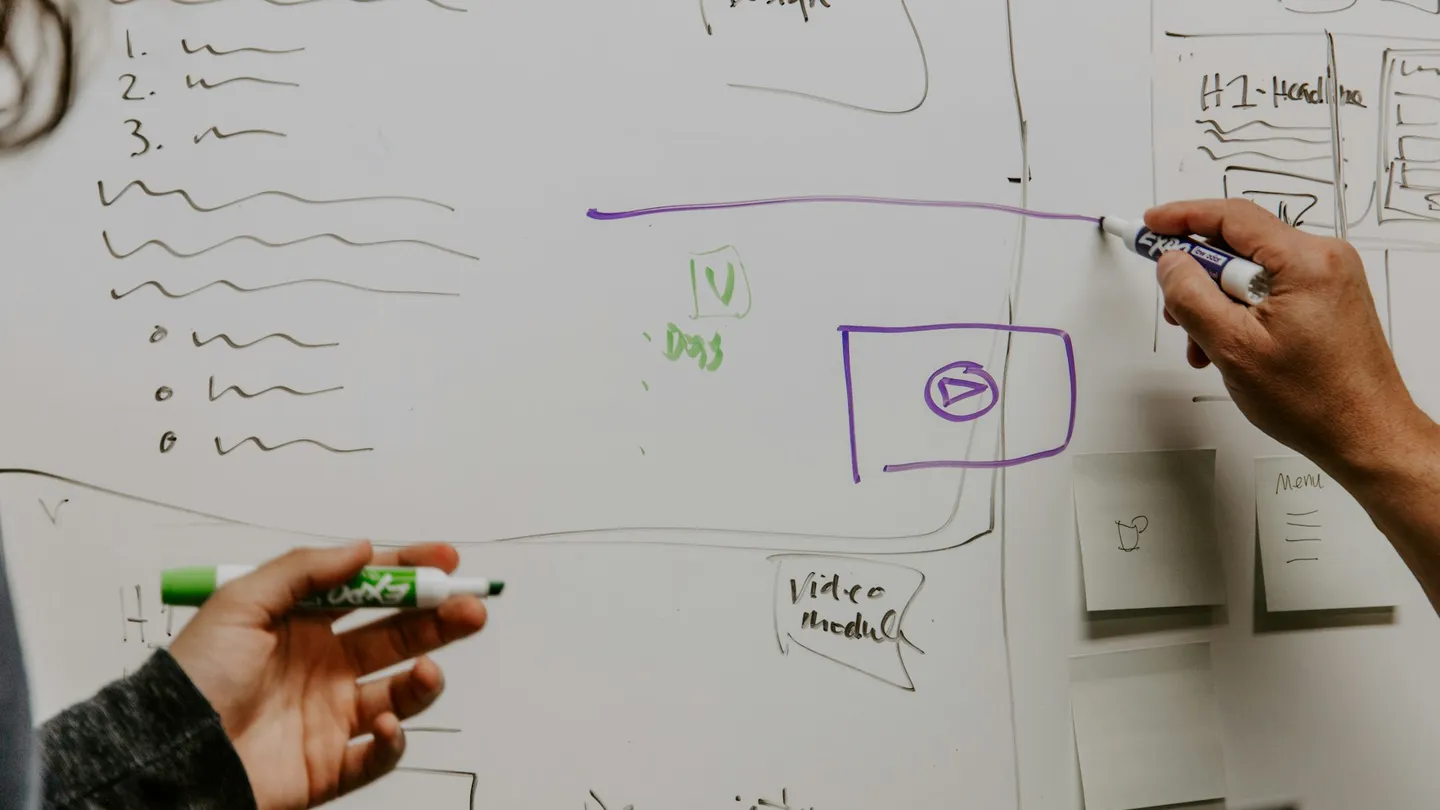
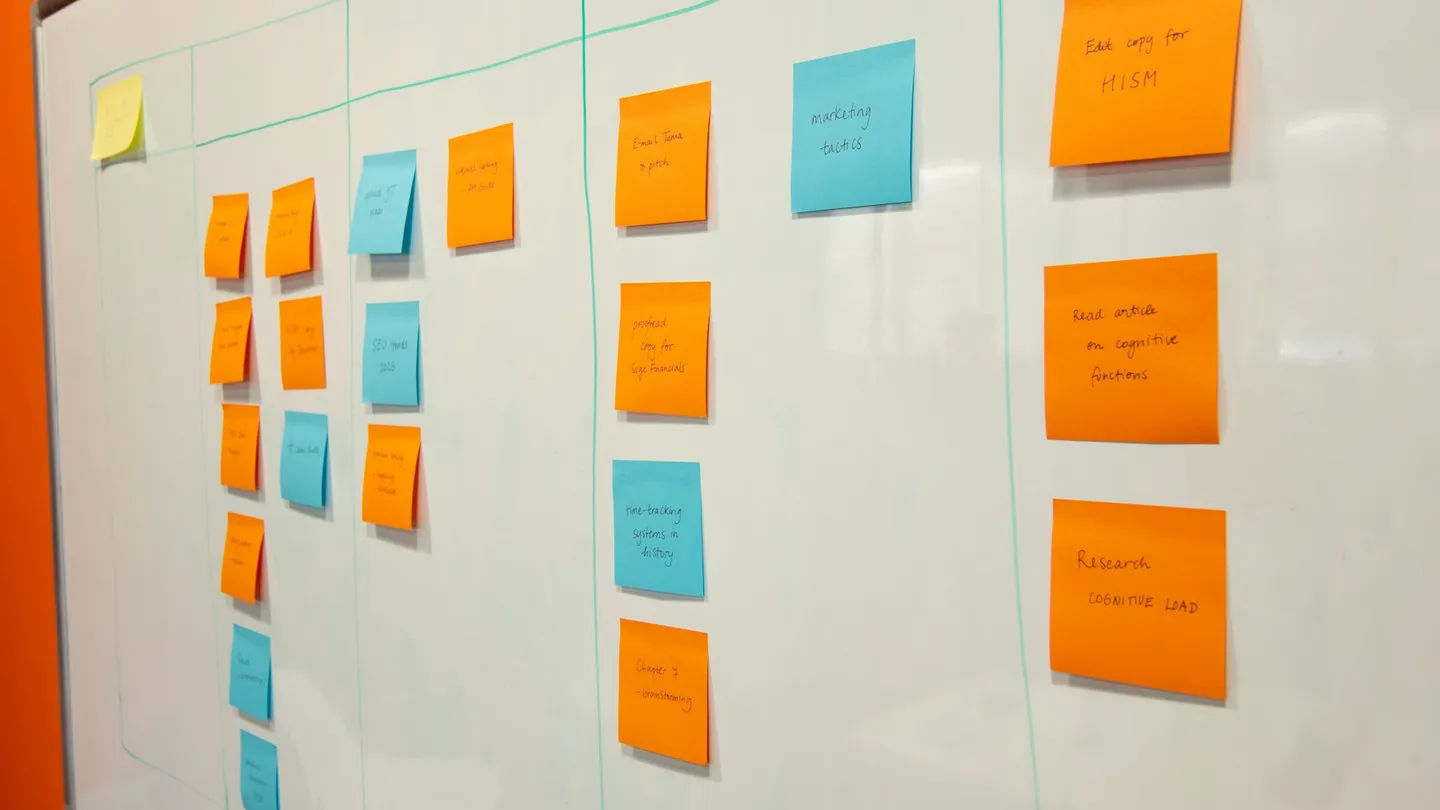
A room full of sticky notes is not an AI strategy. It is a room full of sticky notes. Occasionally quite an expensive one.
A worthwhile workshop narrows the choices, exposes missing evidence and gives named people decisions to make. If everybody leaves with a list of thirty exciting use cases, you have postponed the difficult bit.
The short answer: use an AI strategy workshop to choose one or two problems worth investigating, agree what would make a pilot succeed or stop, and assign the next actions. The deliverable is a decision record, not photographs of the wall.
Who should attend?
Bring the sponsor who can allocate money, the operational owner of the workflow, someone who performs the work, the relevant system or data owner, and a person able to assess risk. One person may cover more than one role in a small business. The frontline perspective should not be optional.
Keep the working group small enough to make decisions. Invite specialists for the sections that need them. A facilitator can keep time and challenge assumptions, but should not quietly become the business owner.
For a UK–Dubai team, choose a genuinely workable overlap and send the materials in advance. Remote participants need the same access to the decision record as people in the room. If Arabic and English are both operational languages, arrange review of examples in both.
Prepare before the session
Ask each process owner for one recurring problem, its approximate frequency, the time it consumes and a few sanitised examples. Include exceptions. Request the existing system list and any restrictions on data or supplier access. Do not distribute confidential records to a room because it is called an innovation session.
Write a one-page problem statement: who experiences the problem, what happens today, what better would mean, and what cannot change. Estimates are acceptable if clearly labelled. The workshop should identify which estimates need measurement.
If nobody can describe the current process, spend the first session mapping it. Pretending the baseline exists saves an hour now and creates weeks of confusion later.
A three-hour working agenda
| Time | Activity | Required output |
|---|---|---|
| 0–20 minutes | Agree the business problem and boundaries | One problem statement |
| 20–50 minutes | Walk through the current workflow | Steps, delays, exceptions and owners |
| 50–80 minutes | Compare AI, rules and process changes | Short option list with reasons |
| 80–90 minutes | Break | Actual break, not more slides |
| 90–120 minutes | Test data, access and risk assumptions | Evidence gaps and constraints |
| 120–150 minutes | Define a bounded pilot | Scope, measures and stop conditions |
| 150–180 minutes | Make decisions and assign follow-up | Decision log, owners and dates |
This is a suggested agenda, not a standard. Complex or contested programmes need more discovery; a straightforward team workflow may need less.
How do you choose the first use case?
Compare the value of solving the problem, the quality of available evidence, feasibility and the consequences of error. Do not let a single numerical score conceal a hard constraint. A compelling benefit does not cancel out a missing right to use the data.
Take an illustrative choice between drafting internal meeting notes and automatically approving customer refunds. Both could save time. The refund workflow has financial authority, fraud and escalation questions that the notes workflow does not. It may still be worth pursuing, but its pilot should stop before making payments.
Use the AI versus automation decision matrix to challenge whether a model is needed at all. A stable rule may solve the problem more simply.
What must leave the room?
Record the selected problem, rejected options and reasons, the pilot owner, available budget, required evidence, and the next decision date. Record disagreement where it affects the plan. “Everyone aligned” is not a useful substitute for the actual decision.
A sound pilot statement reads: test whether draft responses based on approved policies reduce total handling time without increasing material errors. It specifies the sample, reviewer and stop condition. “Explore an AI customer experience solution” does none of those things.
Follow through without another workshop
Circulate the decision record promptly. Ask owners to confirm actions and dates, then start collecting the missing evidence. Escalate unresolved decisions to the sponsor rather than leaving them in a shared document indefinitely.
A workshop has succeeded when the next piece of work is smaller and clearer. If the result is another broad workshop, check whether you are learning something necessary or merely enjoying the stationery.
Sources and scope
Reviewed 1 November 2026. The examples and worksheets are my suggested working methods, not measured client results or official standards.