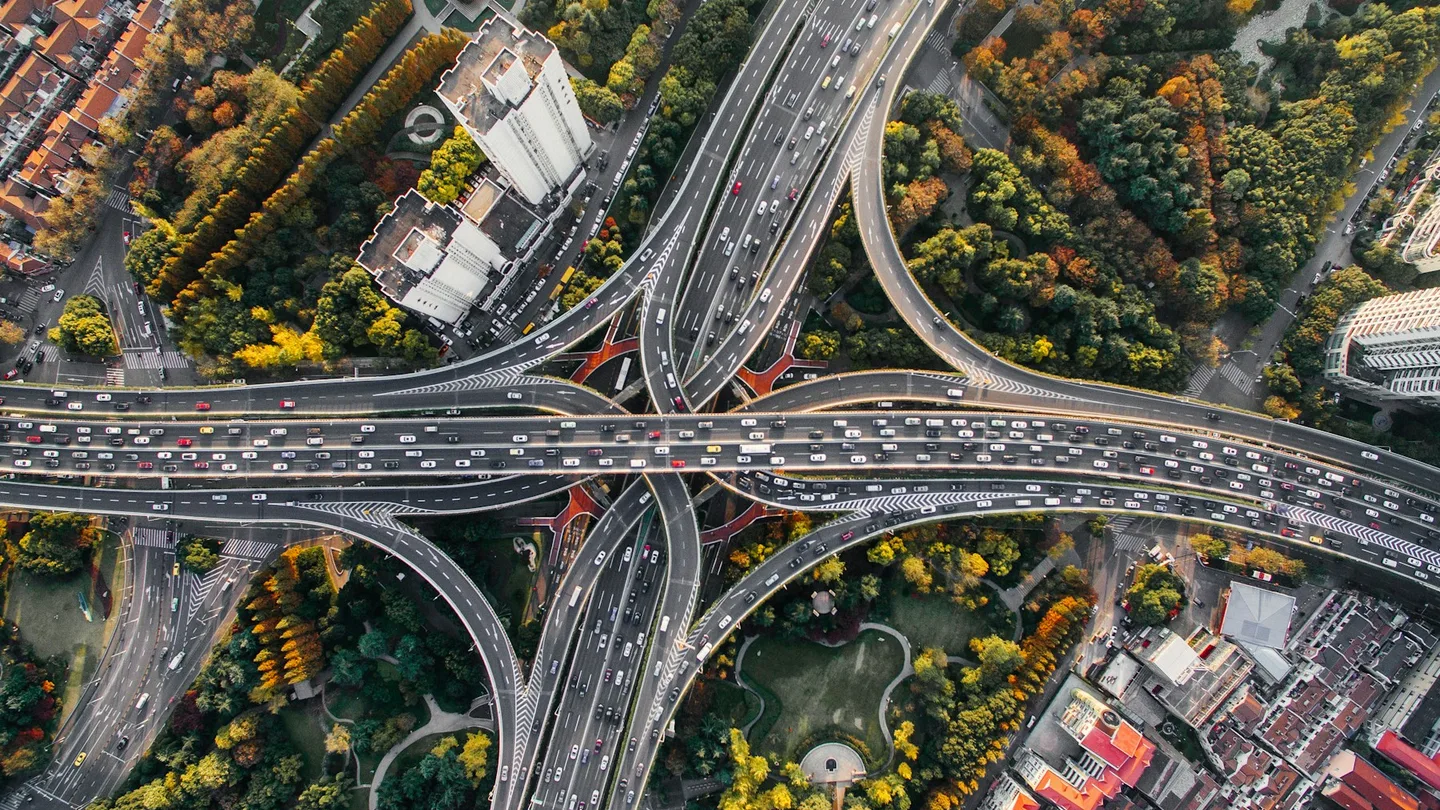
Most people come to digital public infrastructure through payments or ID. I came in through a birth certificate.
The short answer: digital public infrastructure (DPI) is the set of shared, foundational digital systems a country runs as public infrastructure, usually digital identity, digital payments and data exchange. Governments, businesses and citizens build services on top of them, the way trains run on a national rail network. Digital public goods (DPGs) are the open source products that run on those rails.
Key numbers:
- 850 million people worldwide have no legal identity (Co-Develop)
- India's Aadhaar reaches over 1.3 billion people (Co-Develop)
- Brazil's Pix reached 76% of adults within two years of launch (Co-Develop)
- The World Bank's Global DPI programme supports over 80 countries (DIAL)
The DPI and DPG series
Everything I've written on DPI and DPGs, in one place:
- Foundations: DPI vs DPG; What is a digital public good?; How software becomes a DPG; Is my system a DPI?
- Money: How much DPI costs; Is open source government software really free?; What happens after go-live?; How DPI is funded; How systems integrators make money on DPGs
- Implementation: Choosing a first use case; Is civil registration part of DPI?; Digitising civil registration; Digitising historical records; How long implementation takes
- Ecosystem: Open source vs proprietary; The risks of DPI; The 50-in-5 campaign; GovStack; How DPGs work together
How I ended up in DPI (a birth certificate, not a blockchain)
I was working in Bangladesh for Telenor Health. Someone who'd worked for me had been recruited by Annina Wersun, who was out there in the very early days of OpenCRVS. At the time it was being incubated by Plan International's Digital Birth Registration team, running proofs of concept with the government of Bangladesh. There wasn't even a separate entity yet.
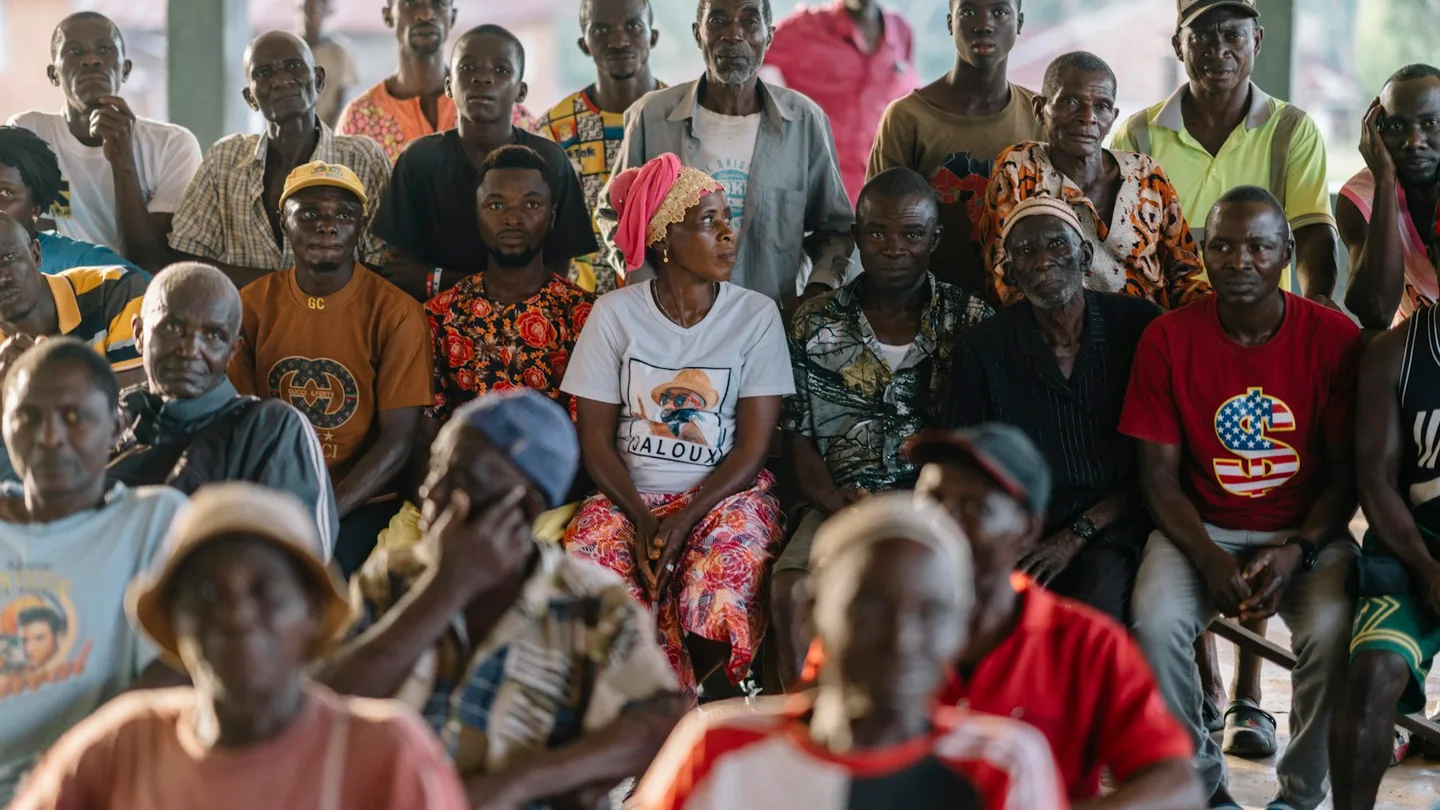
What they were trying to fix was simple and brutal. Millions of children around the world are never registered at birth. No birth certificate means no legal proof you exist. And no proof you exist means no passport, patchy access to healthcare and schooling, and no digital life at all.
That was my moment. In the West we treat a birth certificate as a boring bit of paper in a drawer. In much of the world it's the key that unlocks everything else.
I've always seen myself as an impact entrepreneur, and this was the most direct line between technology and impact I'd come across. I stayed close to the team for years, watched OpenCRVS spin out and grow, and ended up properly immersed in the wider DPI and DPG ecosystem. These days I lead commercial partnerships at OpenCRVS, so read everything here with that in mind.
What are the building blocks of DPI?
Most definitions, including UNDP's, settle on three core components:
| Building block | What it does | Well-known example |
|---|---|---|
| Digital identity | Lets people prove who they are and access services | Aadhaar, India |
| Digital payments | Moves money instantly between people, businesses and government | Pix, Brazil; UPI, India |
| Data exchange | Lets systems share information securely, with consent | X-Road, Estonia |
I'd add one more that rarely gets top billing: civil registration. Births, deaths and marriages are where identity starts. ID and payments tend to move first because governments see the benefit immediately. Civil registration is the more foundational layer, and in practice the two often come hand in hand. More in is civil registration part of DPI?
What makes something DPI, rather than just digitisation?
Putting a paper form online doesn't make it DPI. A ministry app that talks to nothing else isn't DPI either.
The CDPI principles are a good test. Real DPI is:
- Interoperable, built on open standards so other systems can plug in
- Minimal and reusable, a building block many services use, not a full solution for one ministry
- Open to innovation, so banks, start-ups and other agencies can build on top
- Secure and private by design, not bolted on afterwards
The short version: if only one department can use it, it's a system. If the whole country can build on it, it's infrastructure. Try the six-question test.
How is DPI different from a digital public good?
Here's how I explain it to ministers in 30 seconds. DPI is the railway track. Digital public goods are the trains that run on it and actually carry the passengers.
The track is the core infrastructure: identity, payments, data exchange. The trains are open source products such as OpenCRVS for civil registration or DHIS2 for health data, which deliver specific services on top. The line blurs in places, which I cover in the full DPI vs DPG explainer.
Which countries have got DPI right?
India is the obvious one. The India Stack of Aadhaar for identity and UPI for payments let the state reach people directly, and during COVID that capability mattered enormously.
Estonia is the other classic. Its data exchange layer means government services talk to each other, so citizens aren't the ones carrying information from office to office.
Brazil's Pix shows how fast adoption can go when the rails are right: three quarters of adults within two years.
There are many more. These three just get the most airtime.
Who builds and pays for DPI?
Governments own it. But the money often starts upstream with development funders such as the World Bank, the Asian Development Bank and the Pacific Community. In my experience, funders are frequently the biggest advocates, and they're often the ones who bring DPG teams into the room with a country in the first place. See how DPI is funded.
The build itself is usually delivered by systems integrators, from Tier 1 firms like Deloitte and EY to small local tech companies trained up on a specific product. For the numbers, see how much DPI costs to implement.
Is DPI overhyped?
Honestly, no. If anything it's undersold.
This is one of the few corners of tech without a hype problem. The DPG community knows itself well, there aren't many eyeballs on the sector, and most consultants have never heard of DPI or DPGs at all. The people working in it are mostly in emerging and frontier markets, getting on with it.
The real issue is the opposite of hype. Governments are suspicious of anything open source ("how can it be good if it's free?") and plenty of systems integrators still doubt there's money in it. The scale of deployments says otherwise.
My take: the late adopters will win
Here's the opinion I'll defend in any room.
Some of the countries that came late to DPI will overtake the West. Not eventually. Within the next decade.
The reason is structural. A country building on a modern DPG stack skips decades of legacy systems, long vendor contracts and proprietary lock-in. It can launch a service in months, then build the next one on the same rails. Meanwhile, plenty of Western governments are still paying to maintain systems from the 1990s that don't talk to each other.
Speed to market, scalability and cost all favour the country starting now. Watch this space.
Frequently asked questions
What are the three pillars of DPI? Digital identity, digital payments and data exchange. Civil registration is increasingly treated as foundational alongside them.
Is DPI the same as e-government? No. E-government puts services online. DPI is the shared layer underneath that many services, public and private, can build on.
What is an example of DPI? India's Aadhaar and UPI, Brazil's Pix and Estonia's X-Road are the best-known examples.
Does DPI have to be open source? Not strictly, but open standards and interoperability are essential. Many countries build DPI with open source digital public goods to avoid vendor lock-in.
Sources
- Digital Public Infrastructure, UNDP
- What is Digital Public Infrastructure?, Co-Develop
- The DPI Wiki, Centre for Digital Public Infrastructure
- Our story, OpenCRVS
- We need an open conversation about the costs of DPI, Digital Impact Alliance
Working on DPI or a DPG implementation? Let's talk.