
A roadmap full of product names tells you what somebody wants to buy. It may tell you very little about what the business needs to achieve.
The attractive coloured bars do not resolve that problem. They merely make it easier to present.
The short answer: a technology roadmap connects business outcomes to initiatives, dependencies, owners and decisions over time. Show confidence and uncertainty rather than pretending every future item has a reliable delivery date. Start with the change the business needs, then choose the technology work.
Establish the outcome and baseline
Write an outcome someone can observe: shorter onboarding time, fewer failed transactions, faster recovery or the ability to enter a new market. Identify the current baseline and who owns the measure.
“Move to a new platform” is an initiative. Explain why it matters and what would count as success. If nobody can identify the benefit or the risk being reduced, challenge whether the work belongs on the roadmap.
Include enabling work honestly. A security upgrade may be essential even if it does not create a new customer feature. State the exposure or constraint it addresses rather than dressing it up as growth.
Use a roadmap with decision points
| Horizon | What belongs here | Detail required |
|---|---|---|
| Now | Funded, understood work with available capacity | Owner, scope, acceptance and near-term milestones |
| Next | Likely priorities dependent on current learning | Outcome, dependencies and next decision |
| Later | Options whose value or feasibility remains uncertain | Reason to revisit and evidence needed |
The horizons are not universal date ranges. Define them for your planning rhythm. Avoid calling an item “Next” for a year without revisiting why it is there.
Work through an onboarding example
Suppose a business wants to reduce customer onboarding delay. Map the current steps before proposing a replacement system. You may discover duplicate data entry, unclear approvals and missing customer information.
The roadmap could put form and ownership changes in Now, integration work in Next after measuring the revised process, and a broader platform decision in Later. Each initiative should have a measure and a decision owner.
That sequence avoids committing to a large replacement before discovering whether smaller changes solve much of the problem. It also makes dependencies visible: an integration cannot resolve a disputed definition of an approved customer.
Put capacity beside ambition
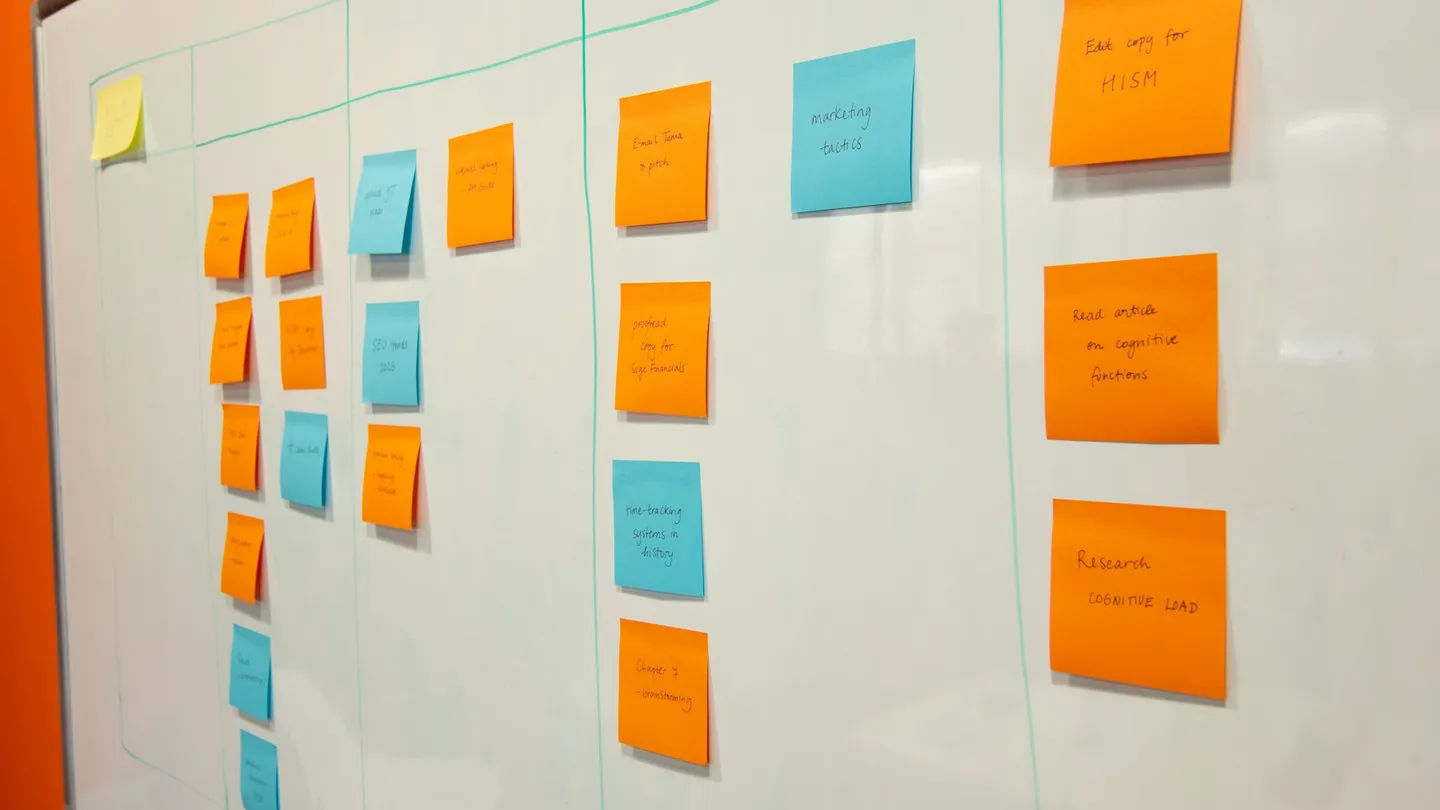
Estimate the capacity available after support, incidents and existing commitments. Discuss the skills required, not just headcount. One specialist cannot simultaneously lead three critical migrations because the spreadsheet has three rows.
Separate committed work from options. If a new priority arrives, show what moves or stops. A roadmap that only grows is a wish list with formatting.
Record supplier and operational dependencies. For UK–UAE teams, include decision availability and handoffs where they affect delivery, rather than assuming every participant shares the same working day.
Review the evidence, not just the dates
At each review, ask whether the outcome is still valuable, whether the baseline has changed, what has been learned and which dependencies remain unresolved. Move, split or stop initiatives when evidence warrants it.
The GOV.UK Service Manual provides useful public guidance on iterative delivery. The template here is my planning aid, not a government-required format.
Keep a decision history. A later reader should understand why a priority changed, especially when a date or commitment was affected. Avoid rewriting the roadmap so that it always appears to have predicted the present.
How detailed should the roadmap be?
Detailed enough to support the next decision. Near-term work needs more definition than a distant option. Keep task-level detail in the delivery system and use the roadmap to explain priorities and dependencies.
A credible roadmap makes trade-offs visible. It should help a leadership team choose what not to do as clearly as it shows what happens next.
Sources and scope
Reviewed 1 November 2026. The examples and worksheets are my suggested working methods, not measured client results or official standards.